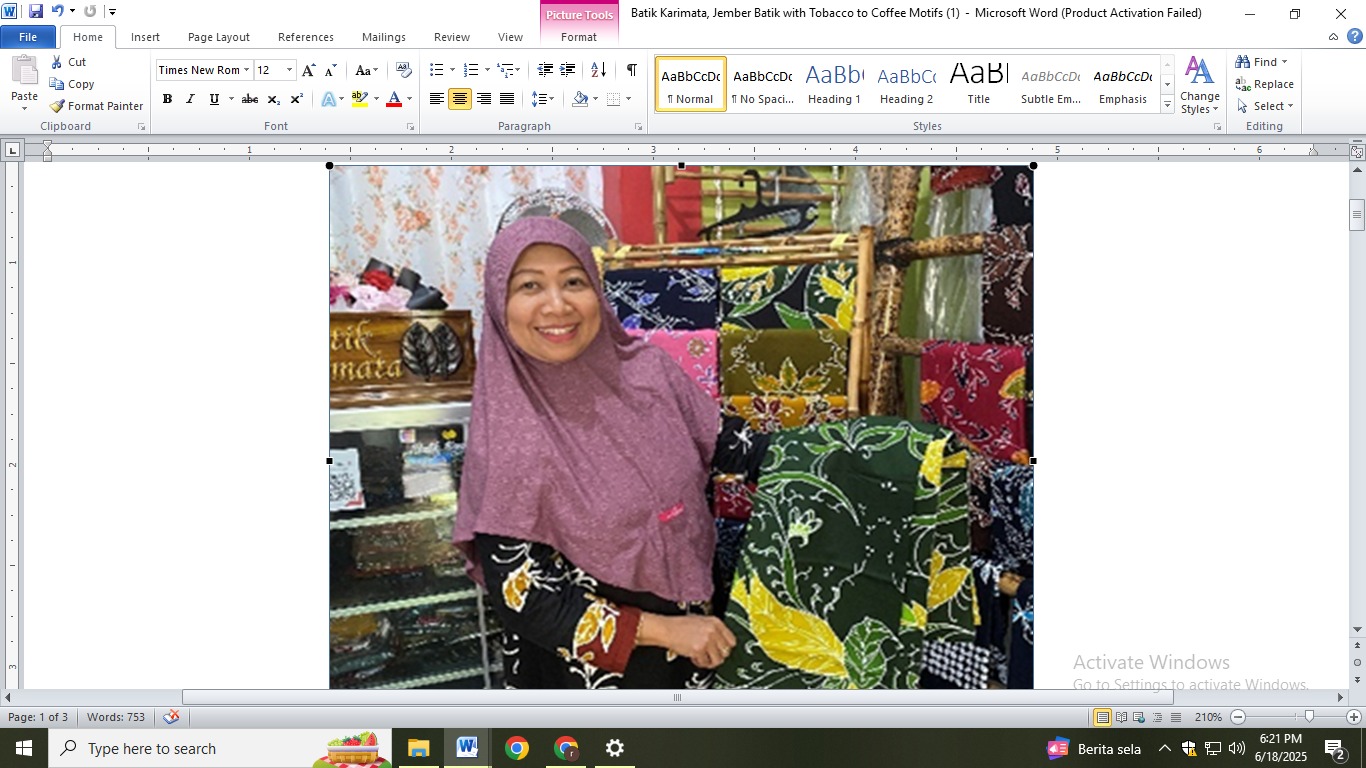
HALO JEMBER - In Jember, batik is more than just fabric, and it is a story; Batik Karimata brings that story to life with Jember hand-drawn batik designs inspired by local agricultural products, such as tobacco and coffee. Each piece carries the spirit of Jember’s culture and tradition, crafted with care by skilled artisans, making it a beautiful choice for anyone who values heritage and art.
Batik Karimata was started in 2021 by Yudiarti, a determined local artist from Sumbersari, Jember. She did this because he wanted to make designs that were unique and connected to Jember.
Before she started making her own batik, Yudiarti bought a lot of fabrics from outside sources, but she did not like how the same patterns kept showing up. She wanted to come up with new ideas, so she learned how to do Jember hand-drawn batik and started making her own unique patterns.
“Finally, I had the initiative to learn how to make batik so that the ublang would have my own original patterns,” Yudiarti said, referring to traditional batik-patterned caps commonly worn by men in Jember during cultural events or as local souvenirs.
From a humble home workshop, Yudiarti gathered a small team mainly made up of local housewives and neighbors. They collaborated to turn their space into a vibrant center for crafting genuine Jember signature batik. This community-focused method not only cultivates local talent but also promotes empowerment and pride in Jember’s vibrant cultural heritage.
Strong color and a focus on local patterns are two things that make Batik Karimata unique. The batik patterns are based on the natural beauty of Jember and include tobacco leaves, coffee plants, cocoa pods, edamame, cigars, and beautiful coastal scenes.
“The main thing is that there are special ones in Jember that are typical of Jember so that tourist guests who come here can easily choose something unique to take home,” she explained.
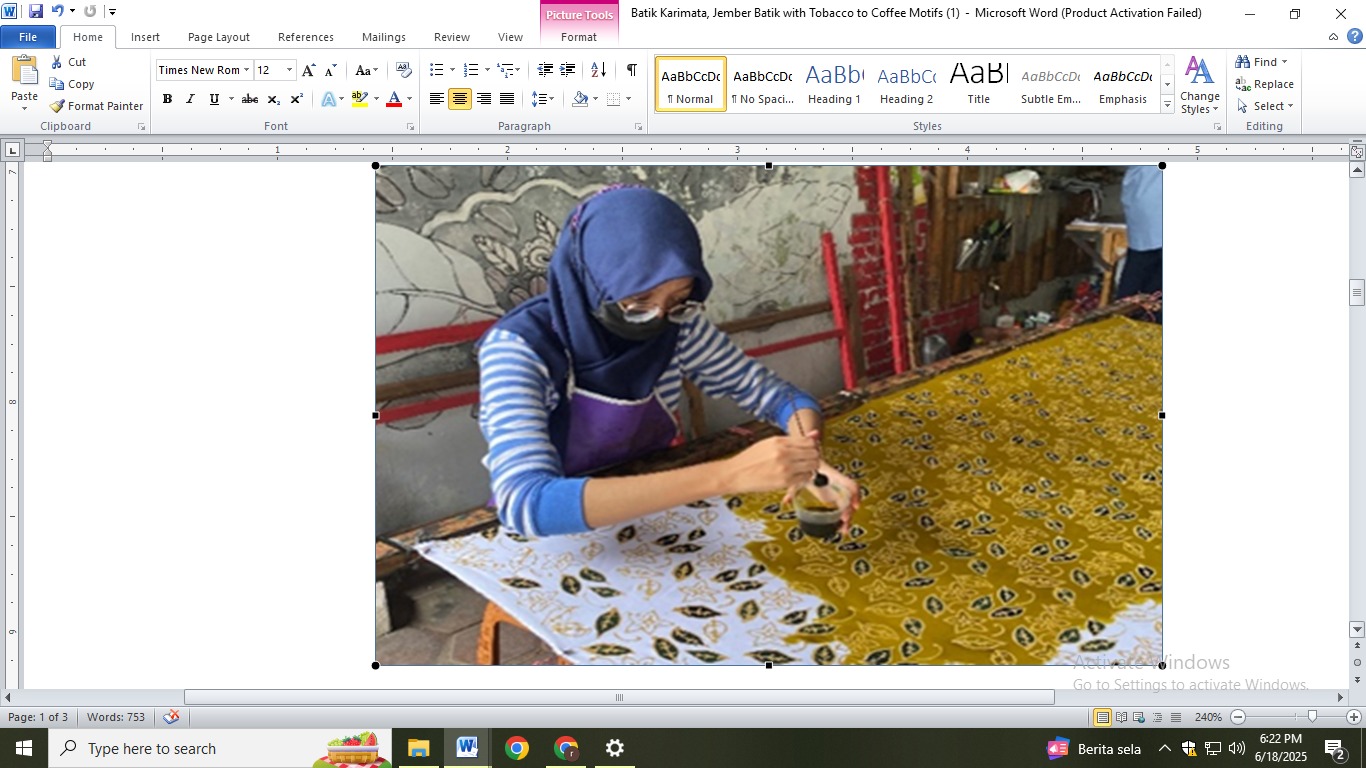
The production process remains entirely in-house, maintaining quality and tradition through each step. From waxing to dyeing and finishing, every piece undergoes careful handwork using Remasol synthetic dyes, known for their vibrant and consistent colors. Unlike many batik producers who rely on sunlight, Batik Karimata air-dries its fabrics to preserve color intensity and maintain steady production, regardless of the weather.
While firmly grounded in traditional techniques, Batik Karimata embraces versatility in its product range. Beyond fabric pieces, the brand offers ubang (traditional caps), shirts, scarves, tablecloths, tote bags, belts, and masks.
This diverse lineup has made the brand particularly popular with tourists and souvenir seekers who appreciate locally crafted items that blend practicality with cultural significance.
Price and How to Get
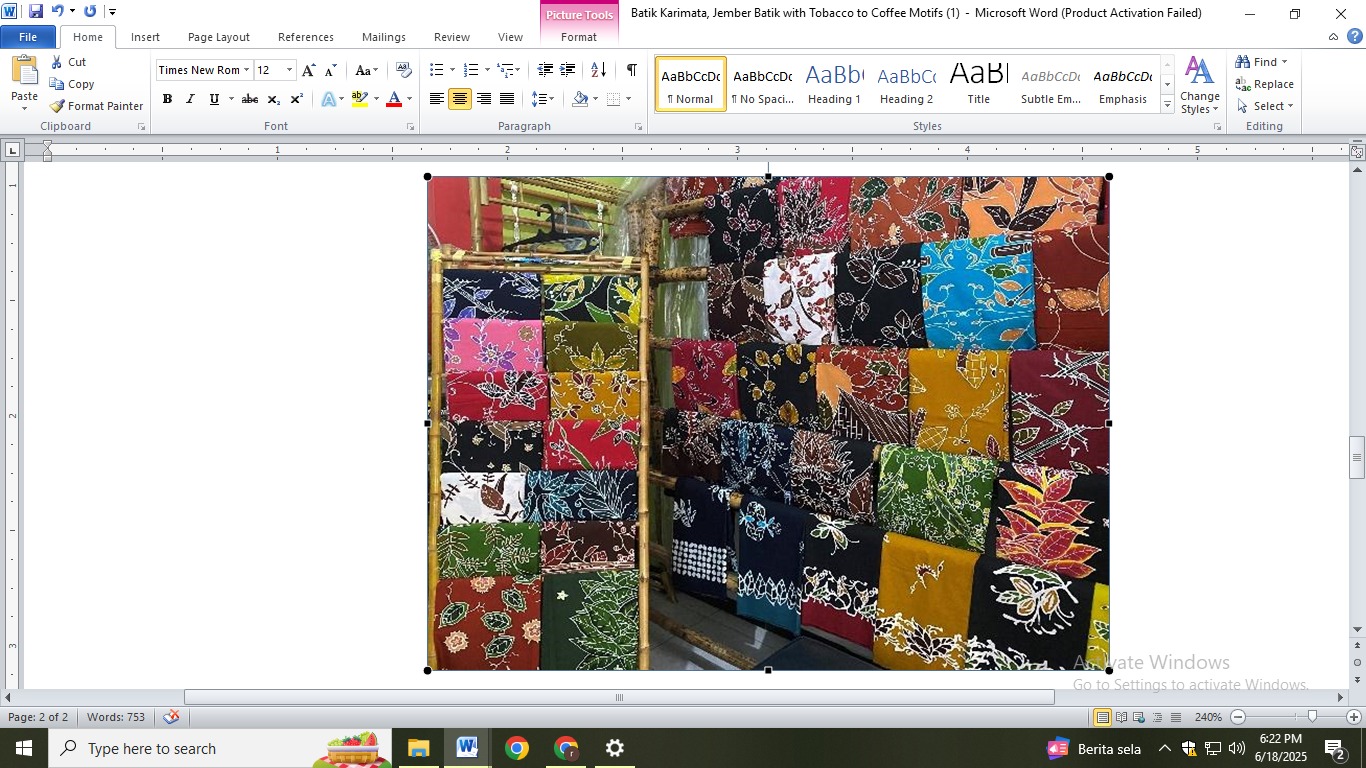
Prices for batik fabrics start at about Rp150,000- 500,000, and prices for ublang caps start at Rp75,000. Batik Karimata is busy on social media sites like Instagram, TikTok, Facebook, and WhatsApp, where customers can easily place orders. Taking part in area exhibitions and events put on by the government makes the brand even more visible and connects it with more people.
Even though Batik Karimata hasn't officially shipped its goods yet, tourists and Indonesians living abroad have already sent them to other countries. People from Malaysia, Singapore, Myanmar, Dubai, and Thailand have bought this signature Jember batik to take home because they like its unique style and cultural value.
Customer Review
“The motifs are good, original Jember has.” – Wangsa
“Even though the colors are very bright, the way they look together is so beautiful and seems to go well with everything. It's also a good idea to use for keepsakes.” – Yuda Cimeel
Batik Karimata is still very interested in coming up with new ideas. The brand provides custom theme services so that groups or institutions can order unique designs that stay true to Jember's roots. They are also adding new types of products, like decorative wall art, to make sure that their creative offers change with the tastes of the market.
Yudiarti is the creative craftswoman who runs this successful business with the help of her husband, Sunito. They worked together to make a simple idea a useful part of Jember's creative economy. Their trip shows how Indonesian craftspeople can inspire, empower, and protect the country's cultural heritage, one hand-drawn design at a time.
Editor : Dwi Siswanto