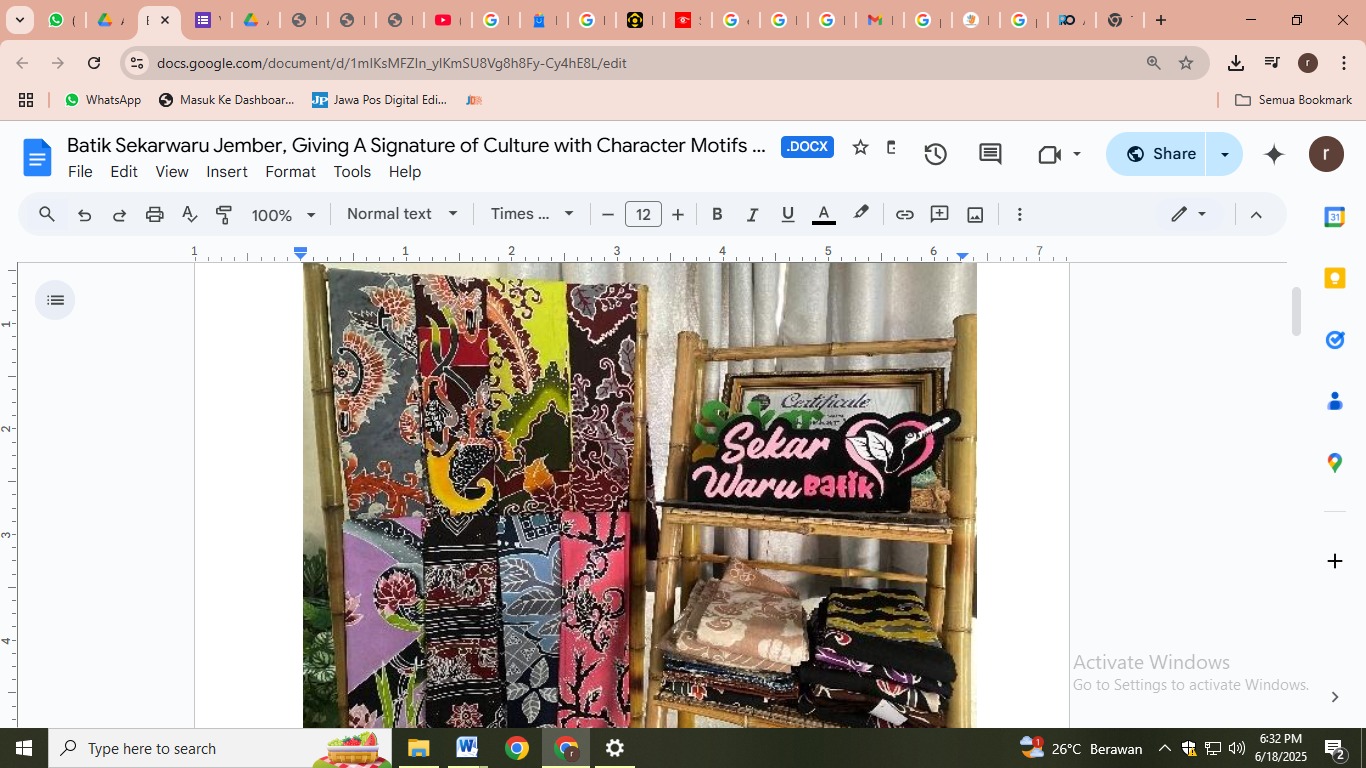
HALO JEMBER - Sekarwaru Batik stands out by keeping alive the tradition of Jember hand-drawn batik, with designs that tell stories of the region’s history and culture, weaving meaning into every pattern. This Jember signature batik combines artistry and education, making each fabric a wearable piece of heritage for those who cherish local identity.
“The clothes are nice, very stylish for young people, and show the archipelago by making fascinating batik designs,” said Kharisma Sofiana. That is how one customer describes Batik Sekarwaru, where local tradition meets creative expression through every fabric design.
Established by Vivin Rofiqoh, sometimes known as Ivy, Batik Sekarwaru marks a dynamic chapter in the history of Batik Jember. Ivy's journey into batik began unannounced; she took a 45-day rigorous program at Industrial Training Center (BLKI) Jember without any prior knowledge and then spent two more years developing her craft.
She developed a business that now empowers local women and preserves the rich legacy of Jember hand-drawn batik under the tenacious direction and advice from batik mentors.
Ivy explained that, “At first, we didn't have a batik base, but from the Industrial Training Center (BLKI) Jember, there was a batik program, and it was hand-drawn batik. At first, we just wanted to join at that time because we were already working and already teaching.”
About 15 women artisans are employed by the Sekarwaru village workshop; before to joining the cooperative, the majority of them had few employment options. Ivy emphasizes that the company's mission extends beyond creating genuine batik to include community empowerment. Batik Sekarwaru gives women who are housewives or have limited mobility a purposeful way to make money while maintaining their traditional heritage.
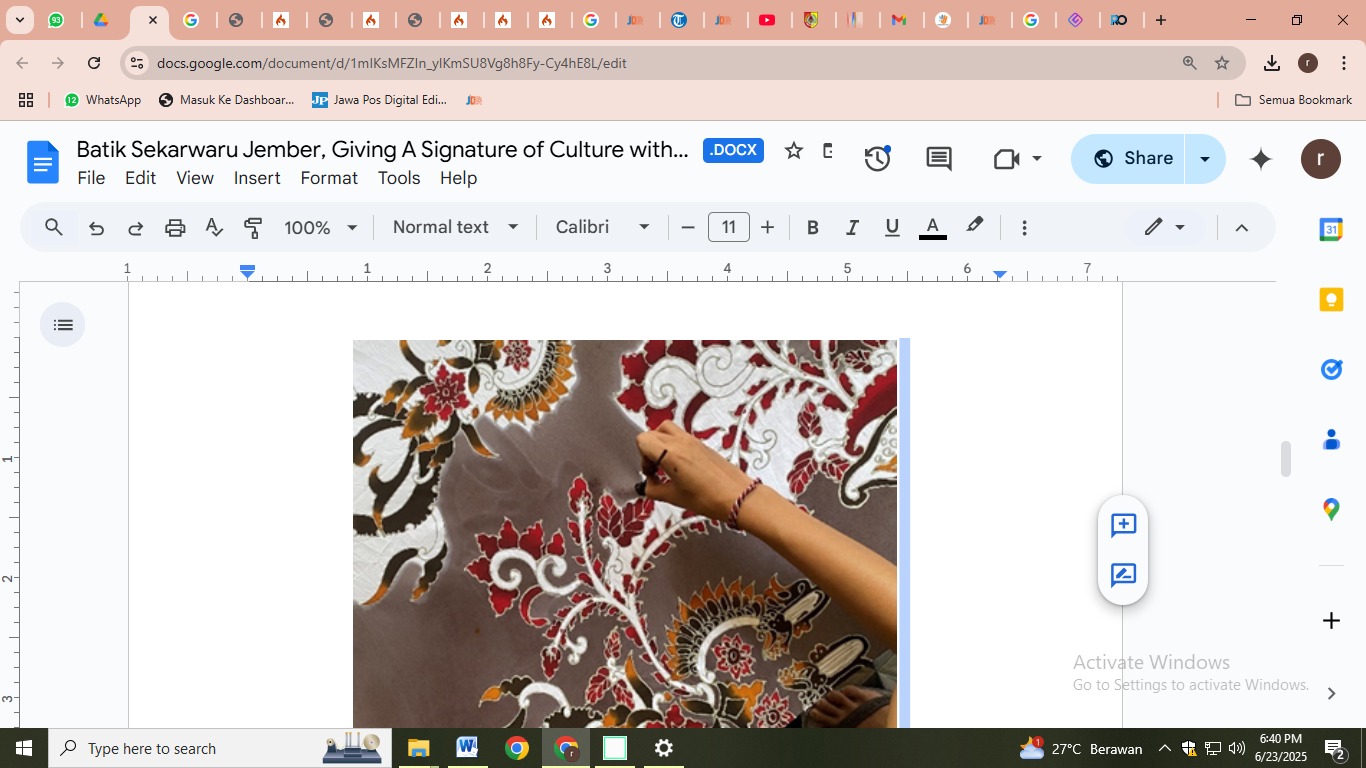
Sekarwaru’s batik is fully handmade, following the intricate six-step batik tulis (hand-drawn batik) process: designing, nyanting (waxing), coloring, soaking, fixing the dye, and air-drying. The authenticity and quality of the brand depend mostly on this handcrafted approach. The fabrics chosen are of national standard cottons, ranging from the more affordable katun prima to premium cotton and even silk upon special request.
“We prioritize Jember patterns first, such as tobacco, coffee, and cocoa from crops, and historical ones such as Pasadeng from the Sadeng Puger Kingdom in Jember,” Ivy said.
Sekarwaru distinguishes itself in the packed Batik Jember scene with its own patterns and technique. Their two trademark designs define their collection: Batik Karakter, with whimsical cartoon designs meant to appeal to younger consumers, and Batik Gradasi, with gentle gradient colors.
This creativity dispels the common belief that batik is only for formal events or elderly generations. Rather, Sekarwaru asks young people to embrace their background by using relevant and entertaining designs.
Patterns in Sekarwaru batik often reflect Jember’s rich natural and cultural fabric, including themes like tobacco leaves, coffee beans, cacao plants, the historical Sadeng Kingdom, and scenic landmarks such as Papuma Beach. Sekarwaru is a real Jember signature batik brand because of its link to location; every item offers a tale that both residents and tourists would value.
Apart from textiles, Sekarwaru provides custom-made ready-to-wear clothing like shirts and dresses, largely driven on demand. Although there is a limited supply, consumers appreciate the ability to customize colors and patterns, therefore assuring every outfit is different. The manufacturing stays totally local, therefore underlining the brand's dedication to quality and community.
Sekarwaru batik costs, price-wise, IDR 175,000 for cotton prima textiles and up to IDR 250,000 or more for superior-grade materials. Special order silk batik pieces appeal to customers looking for luxurious traditional fabrics.
Sekarwaru's influence goes far beyond the town of Sekarwaru. Their buyers come from all over Indonesia, including Sumatra, Kalimantan, Sulawesi, Papua, and Lombok. This shows that Jember hand-drawn batik is becoming more popular all over the country.
They have sent small amounts of goods to Australia, Hong Kong, the UAE, Pakistan, and Turkey, among other places. Ivy is still optimistic about the brand's future global influence, even though full-scale export is still hard because of complicated customs rules.
The brand actively promotes itself on social media sites like Instagram and Shopee, and it regularly takes part in local and regional events like the Jember Fashion Carnaval and the Jatim Fair. These efforts not only get people to buy their goods, but they also help them connect with customers on a deeper cultural level.
Customer Reviews
“The batik motifs here are really good and have their own characteristics.” – Bagus L. Leonardo.
Batik Sekarwaru is more than just a business; it's an effort to protect the Batik Jember heritage, give local women more power, and make people proud of Indonesia's rich textile arts.
Batik Sekarwaru continues to grow as a local brand that honors tradition through design, a reflection of Jember’s cultural richness stitched into every pattern.
Author: Sufi Binti Khofifah
Editor : Dwi Siswanto